Unknown's avatar

About sgleahy

An old dog learning new tricks. Former FX Risk & Platforms guy now into digital assets, Better Govt, and Deep Powder. Arise, Sweat, Nourish, Think, Create, Play, Love, Rest. Twitter / Insta / Telegram: @sgleahy

Fin Svcs: No Rearview Mirror Needed

State Street Bank (NYSE: STT) announced another 360 layoffs today, mostly targeting “executives and senior staff”.  This news comes on top of the 600 staff laid off last fall.

Goldman Sachs, Credit Suisse, Morgan Stanley have all announced massive layoffs in the last few weeks and this trend will not abate.  There are a few reasons that come immediately to mind such as a slowing global economy, and increased regulations.  But I suspect there is another fundamental change; the decentralization that comes with improved technology and infrastructure.

The industry of financial services, with banks and brokers acting as middle men, will look very different in 20 years.  And the large, globally recognized names that have sat atop the world’s financial system for generations will not be needed.

Of course there will be a need for the functions those banks and brokers do.  Lending, executing and tracking trades of all kinds, managing assets, providing M&A advice are necessities for global trade to exist.  But the technologies and companies that are harnessing those technologies do not look anything like traditional banks and brokerage firms.

The role of M&A advisor is the safest of those functions but even that role has been changing.  Pres. Clinton and Congress effectively removed the Glass Steagall Act of 1933 by allowing commercial banks and investment banks (in this case Citibank and Travelers Insurance) to merge in 1999.  And the small boutique M&A advisors were crushed.  Commercial banks who had the ability to do the actual lending could now act as advisors too.  And they could use their balance sheets to set up equity trading operations to help make active markets for companies that went public.  But Dodd-Frank has changed that.  In the last 6 years there have been numerous success stories of M&A bankers starting small boutiques that offer advice only; no lending or market making needed.

The other financial intermediary roles (asset manager, lender, custody banking) are starting to look different than a guy in a suit with well-shined, cap toe shoes and a navy suit.  Those roles are being handled by coders who wear Atari t-shirts and ripped jeans, but who can build programs to better diversify a portfolio, or can match a lender’s profile with a borrower’s request (and run a full credit check) in seconds.  Betterment and Smartleaf for wealth management, Kabbage for peer to peer lending, Kantox for global FX transactions, etc.

In the Margin Trading Products (“MTP”) industry, bank wires were the norm for funding as recently as 2012.  Now most MTP brokers and online gaming companies receive the vast majority of client deposits and withdrawals via payment service providers (“PSP”) like Safecharge, Neteller, YuPaay, etc.  There are a few PSP’s that are large and stable, but that industry seems to birth a new PSP every few weeks.  As a MTP broker or online gaming company, you need to be able to connect and work with those new PSP’s very quickly.

So it is no surprise that the largest financial firms are laying off workers and seeing diminished market capitalization.  The benefits of scale that had been present in financial services for a long time are wearing off and the smaller, nimbler companies are taking advantage of that seismic change.

The future of financial services does not look much at all like the past; no need for a rearview mirror.

Agile Workflow Simplifies Life

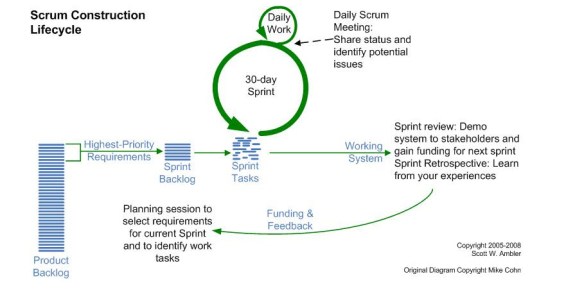
When I was first introduced to the Agile workflow philosophy, I was struck as how simple this framework was to use.  The below image breaks down the basic steps involved by anyone running multiple projects at a given time.  The workflow is considered a software development philosophy, but I use it for managing all my projects, and each individual project.

Any manager of projects or organizations should understand the basic principles of Agile development philosophies to see if and where they can be used in your project flow.


PS – Thanks ThinkStock by Getty Images….sorry I was too cheap to purchase.


Agile Philosophy Visualized

“You either tell the computers what to do, or…

….the computers will tell you what to do.”

I first heard this line from Jesse Johnson, co-founder of oneZero Financial Systems, many years ago.  I see it proven correct time and time again.  It is why I allow my kids extra time on their tablets if they are on Code.org, or Tynker.com.  I believed it when Jesse said it, and I see it everyday, you either tell the computers what to do, or the computers will tell you what to do.  And I believe those who are succeeding now and will succeed in the future will be those who tell the computers what to do.  That does not mean you have to be a coder (though it helps).  It means you have to be able to understand how to make value out of the hardware and software and those people who can code.

Leaprate.com has an interview with the head of marketing for a brokerage firm that built their own sales/marketing/retention automation kit and now they are selling that to outside entities.  In reading the interview I noted how many time she referred to the “humans” who are acting on triggers which come from the “platform” (read as software).

Another company in the Margin Trading Products (“MTP”) industry gained a lot of visibility and value with their ability to onboard and retain a massive amount of clients and assets with a very small sales and retention staff.  Plus500 (LON: PLUS) was at one point worth more than $1 Billion GBP (approx $1.45 Billion USD).  The company had fewer than 200 employees; I had been told by a reporter in Tel Aviv there were just 86 total employees at the company’s height.

The company has been through a lot of corporate drama since it’s highest valuation in May 2015. The UK’s FCA halted their client on-boarding due to KYC/AML issues but has now been re-instated.  Corporate takeovers have been announced then abandoned.  And C-suite turnover has been high in the last three months.

But the real story is Plus500’s quiet rise to prominence and the lessons other industry firms are working to learn and implement.

Plus500’s business model kept the company focused on a business paradigm that had been all but abandoned in the previous 7 years.  Other brokerage firms had long ago given up the on proprietary trading platform and direct marketing as a business model.  Most brokerage firms were offering and promoting a commonly-shared trading platform; MetaQuotes’ MetaTrader4.  And brokerage firms focused on supporting independent Introducing Brokers (“IB’s”) as a primary means of sourcing clients.  With a common trading platform there was little to prevent a client from switching from Brokerage Firm A to Brokerage Firm B.  So the brokers were engaged in a market share war with the main differentiation being the price shown to clients, and any promotions given to land a client.  The average cost to acquire a user went down significantly, the time and costs to educate a user on how to use the trading platform went down, but the lifespan of a client went down as well since there was an increasing amount of clients lured away by competitors.

But Plus500 went the old school route.  They had a proprietary platform so that once clients learned to use the Plus500 platform, it would not be simple for clients to switch brokers as they would need to learn a new platform.  Plus500 also went after new traders, rather than compete with other firms for existing traders.  This is significant because it increased their costs per user acquisition, but it allowed Plus500 to target users who were not as price sensitive as existing clients.  So while price spreads at most brokerage firms were getting squeezed, Plus500 enjoyed considerably larger gross margins than their competitors.

Plus500 also run their advertising campaigns almost completely outside the lines that the MTP’s traditional brokerage firms use.  And I have not been able to determine where Plus500 advertises, nor what keywords they use.  I read and search multiple MTP industry websites and keywords every day.  Even using foreign VPN’s to access information on firms that do not cater to individuals who reside in the USA such as myself.  But never has a Plus500 banner or search result showed up on my screens.  And when I ask other industry executives these questions about Plus500, they seem to all have an “Ah-Hah!” moment.  They, too, realize that Plus500 is successfully sourcing new clients from non-typical sources.  The only information I have gained as to Plus500’s advertising is from the industry reporter who informed me Plus500’s advertising is wholly data-dependent, and targets the tangential prospects rather than the openly interested prospects.

Finally, Plus500 built and runs a sales / onboarding /  retention automation system that blows competitors out of the water.  Using a foreign VPN, I signed up for a demo account.  I do not know if they built their CRM completely from scratch, or if they used an existing CRM platform as a basis.  But the login they coded into their automation works!  Demo accounts that have a few successful traded get an auto-generated e-mail congratulating them and placing a simple Call-To-Action (“CTA”) in front of the demo user to open a live account.  The pattern of e-mails to my Inbox is not predictable (like most companies use).

The on-boarding process is what got Plus500 in trouble with the FCA.    Simply put, Plus500 did not require full documented KYC/AML documentation prior to allowing clients to start trading.  The requirement to complete all stages of KYC/AML paperwork was not needed until/unless a trader wanted to withdraw funds.  It is important to note that this practice cost Plus500 half it’s market cap when the FCA halted client on-boarding in the Plus500 UK subsidiary (Cyprus-based operations continued as normal).  Plus500 has since changed their on-boarding policies for UK clients and the company has regained much of it’s value.  But by allowing clients to deposit and start trading quickly, and by making it more complex to withdraw funds, Plus500 has been able to generate more revenues from each trader.  So while blatant disregard for KYC/AML rules is unacceptable, many companies are now working to make their on-boarding process as short and simple as can be allowed while maintaining the integrity of the process.

To bring this discussion back to my headline, Plus500 quickly built an extremely profitable MTP brokerage.  And a significant aspect of that growth was because the founders understood the possibilities of successful automation.  They told the computers what they wanted and allowed the computers to determine the most efficient processes, and the computers largely did the work.  Less than 100 employees and a $1.45 Billion USD market cap in just 5 years is quite a feat.

So do not expect me to be creating and managing sales and retention teams of 100 people around the globe any time soon.  You will find me sourcing coders and big-data specialists who can leverage the power of computing by telling the computer what to do.

 

Hackers > Central Bank of Bangladesh

  • Hackers can steal $80 mio from the Central Bank of Bangladesh.  

This story on Reuters from Bangladesh is a good reminder that hackers are smarter and more daring than you think they are.


ALSO:

Two things about now, the current state of things: 1) Mobile First; 2) Security First.

Yes, both Mobile and Security your first priority.

#Never

This video appeared on unofficialnetworks.com (ski bum website) last week.  I was astonished that these public employees would put their lives on the line and do battle with a large mountain lion in this manner.  It is a rare occasion I am happy to have a “desk job”, but it seems better than having your boss tell you, “Go free that angry mountain lion.”

Tom Friedman Knows POTUS

Tom Friedman is a favorite writer of mine.  His understanding of American politics and global issues seems to be FAR ahead of any candidate that we see and hear these days.  Below is a part of his column from the New York Times today (all words are Fridman’s, not my own)

When the U.S. military trains fighter pilots, it uses a concept called the OODA loop. It stands for observe, orient, decide, act. The idea is that if your ability to observe, orient, decide and act in a dogfight at 30,000 feet is faster than the other pilot’s, you’ll shoot his plane out of the sky. If the other pilot’s OODA loop is faster, he’ll shoot you out of the sky. For a while now, it’s been obvious that our national OODA loop is broken — and it couldn’t be happening at a worse time.

Our OODA loop is busted right when the three largest forces on the planet — technology, globalization and climate change — are in simultaneous nonlinear acceleration. Climate change is intensifying. Technology is making everything faster and amplifying every voice. And globalization is making the world more interdependent than ever, so we are impacted by others more than ever.

These accelerations are raising all the requirements for the American dream — they are raising the skill level and lifelong learning requirements for every good job; they are raising the bar on governance, the speed at which governments need to make decisions and the need for hybrid solutions that produce both stronger safety nets and more entrepreneurship to spawn more good jobs. They are also raising the bar on leadership, requiring leaders who can navigate this complexity and foster a resilient country.

My own view is that these three accelerations have begun blowing up weak countries — see parts of the Middle East and Africa — and they’re just beginning to blow up the politics of strong ones. You can see it in America, Britain and Europe. The challenges posed by these accelerations, and what will be required to produce resilient citizens and communities, are forcing a politics that is much more of a hybrid of left and right.


You Get What You Elect

It happens too often.  Discussing something to do with our government…..I ask, which candidate did you vote for last election cycle?  They answer, “Well I did not get a chance…blah, blah, blah”

Voting is one of the few ways ordinary citizens can make change for the better.  If you do not vote, I do not want to hear you complain.  Sure you pay taxes, we all do.  But since you are spending the money, why not help hire the staff?!?!

Beware HIPPO’s

This has nothing to do with massive animals found in Africa.  It has to do with getting things right in an office environment.

HIPPO is an acronym that stands for HIghest Paid Person’s Opinion.  And if your company or team is run via the HIPPO method, you are doing “It” wrong.

And what is, “It”?   In this case, “It” means that either your company leader has hired small talent and purposefully wants a team of people below him who are there to execute his/her orders.  This should tell you how you and your colleagues are perceived by your leader.

Or “It” could mean your HIPPO does not realize that they have hired knowledgable staff, who are paid by the company to solve problems with their domain expertise.  HIPPO is rightly associated with loud-mouthed jerks.

Either way the employees are gonna be unhappy and short-lived.  Talented workers do not want to work under an authoritarian HIPPO.  They want to be asked to solve problems, be given the resources to do so, work with colleagues to finalize solutions, then implement.

As for me, I only want to see HIPPO’s when I go to the zoo.

Building a Perfect Team – NYT

The below are excerpts taken from the first chapter of an extensive article in the New York Times magazine.  I have always been a student of capturing performance in organizations.  Some of the information in this article (I have only yet gone through Chapter One) goes against traditionally-accepted norms for building and managing teams.   My personal highlights are below.  Italicized words are directly copied from the NYT Magazine Article.

  • When building teams, does it matter the personality types involved?  If there were similar interest?  Motivated by similar rewards?  Google’s analysis showed that the team composition did not mater to the performance of the teams.  Differing mixes of personalities, ages, goals did not make a discernible difference to the effectiveness of any team.
  • Group norms, led by a strong leader but agreed to and embraced by all members is a hallmark of successful teams.
  • As the researchers studied the groups, however, they noticed two behaviors that all the good teams generally shared. First, on the good teams, members spoke in roughly the same proportion, a phenomenon the researchers referred to as ‘‘equality in distribution of conversational turn-taking.’’ On some teams, everyone spoke during each task; on others, leadership shifted among teammates from assignment to assignment. But in each case, by the end of the day, everyone had spoken roughly the same amount. ‘‘As long as everyone got a chance to talk, the team did well,’’ Woolley said. ‘‘But if only one person or a small group spoke all the time, the collective intelligence declined.’’

    Second, the good teams all had high ‘‘average social sensitivity’’ — a fancy way of saying they were skilled at intuiting how others felt based on their tone of voice, their expressions and other nonverbal cues. One of the easiest ways to gauge social sensitivity is to show someone photos of people’s eyes and ask him or her to describe what the people are thinking or feeling — an exam known as the Reading the Mind in the Eyes test. People on the more successful teams in Woolley’s experiment scored above average on the Reading the Mind in the Eyes test. They seemed to know when someone was feeling upset or left out. People on the ineffective teams, in contrast, scored below average. They seemed, as a group, to have less sensitivity toward their colleagues.

    In other words, if you are given a choice between the serious-minded Team A or the free-flowing Team B, you should probably opt for Team B. Team A may be filled with smart people, all optimized for peak individual efficiency. But the group’s norms discourage equal speaking; there are few exchanges of the kind of personal information that lets teammates pick up on what people are feeling or leaving unsaid. There’s a good chance the members of Team A will continue to act like individuals once they come together, and there’s little to suggest that, as a group, they will become more collectively intelligent.

    In contrast, on Team B, people may speak over one another, go on tangents and socialize instead of remaining focused on the agenda. The team may seem inefficient to a casual observer. But all the team members speak as much as they need to. They are sensitive to one another’s moods and share personal stories and emotions. While Team B might not contain as many individual stars, the sum will be greater than its parts.”

  • Psychological safety, a feeling by each member that they were free to speak their mind and to be listened to, is one of the few behaviors found in almost all the successful groups.
  • What Project Aristotle has taught people within Google is that no one wants to put on a ‘‘work face’’ when they get to the office. No one wants to leave part of their personality and inner life at home. But to be fully present at work, to feel ‘‘psychologically safe,’’ we must know that we can be free enough, sometimes, to share the things that scare us without fear of recriminations. We must be able to talk about what is messy or sad, to have hard conversations with colleagues who are driving us crazy. We can’t be focused just on efficiency. Rather, when we start the morning by collaborating with a team of engineers and then send emails to our marketing colleagues and then jump on a conference call, we want to know that those people really hear us. We want to know that work is more than just labor.